The Birds Return
Sandhill Cranes
At the close of my last post, I mentioned I’d be writing next about the Sandhill Crane. I had collected a fair number of pictures of a mated pair and their colt and had been culling through them to find the best assortment. Just as they flew south, though, I got distracted by the day-to-day (home remodel, work, etc.).
It’s a new season, and the Sandhill Cranes have returned so I figured I’d send out some photos with a bit of commentary. A few notes:
A reminder on ethical birding. Most of the images I share are cropped and zoomed, so I’m not nearly as close as it may seem, and I never chase/follow. By allowing a creature to feel safe, I encourage not only their wellbeing but their return year after year
The images are all better viewed on a larger screen, though I do try to include images that look nice on mobile devices
It’s okay if you’re here just for the pictures, scroll through the text!
Feel free to engage in the comments section
Early Spring
Since arriving in the Driftless, my annual first sighting of the Sandhill Crane has been at different points of their nesting journey. The first spring and summer, I failed to spot the cranes at all: ignorant of their presense and just beginning to build interest in birding. The following year, it was after their eggs had hatched and they were walking around with two colts, which coincided with the arrival of a lens long enough to capture decent pictures. Last year, they were well into raising their colt before I saw them, and this year it’s almost like I spotted them the moment of their arrival, before they even painted their feathers. Of course, I’ve become much more deliberate in seeking out “target” birds.
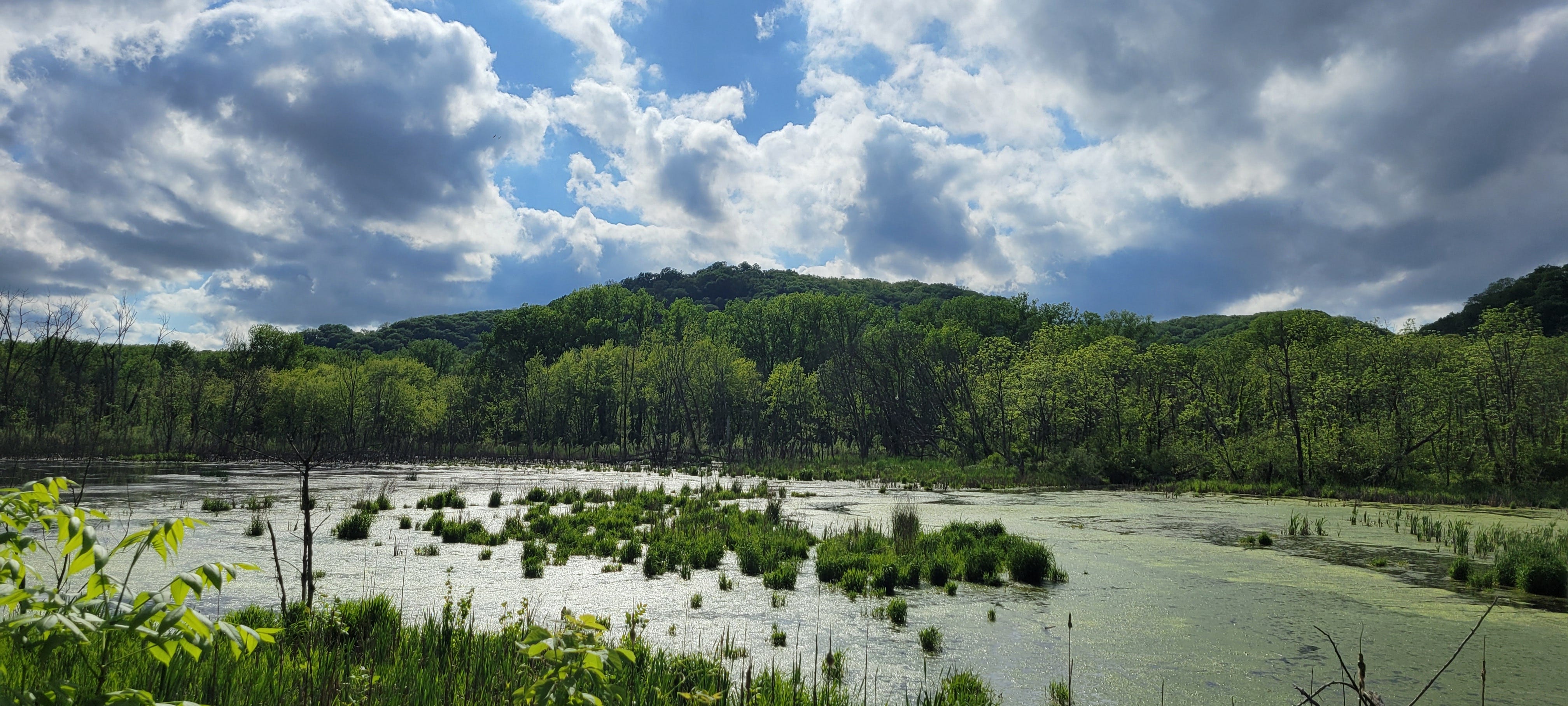
Sandhill Cranes often return to the same nesting area, if not the same nest, year after year. So, in late winter and early spring, I start slowing down as I drive through Rush Creek. My anxiousness to see the Sandhill Cranes builds as the snow and ice melt, and it seems they might never arrive.
You’ll hear them first. This year, in mid-February, they called out as they flew high overhead during my morning walks. A couple of weeks later, I spotted the cranes.
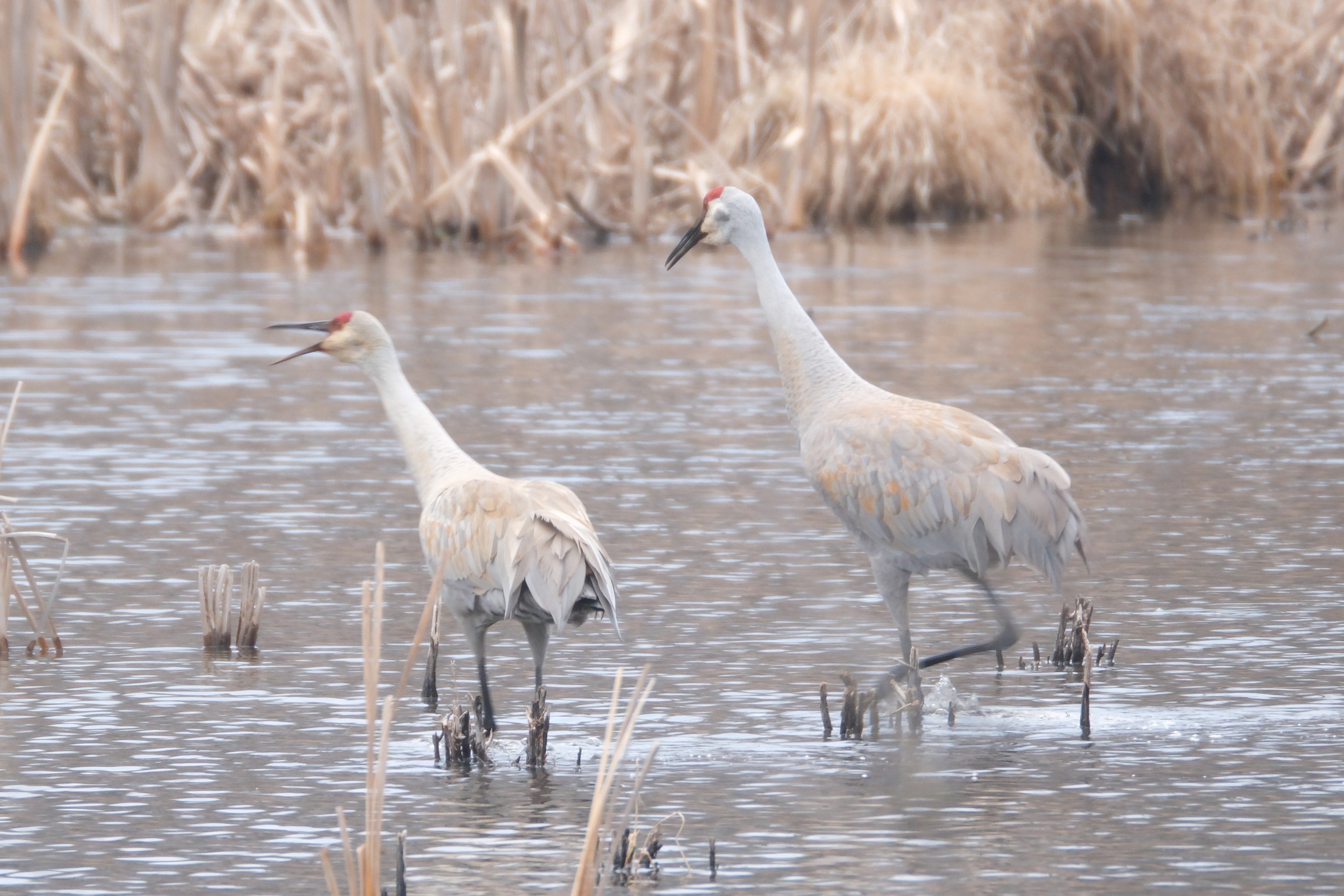
They arrived with ashy-blue plumage with the fainest rusty tinge. As you can hear, they’re making a ruckus (I had the wits about me to record with my phone):
They call to alert other Sandhill Cranes, warning them a particular area is occupied, but their calls are also used to greet each other and, of course, for courting. This pair has been together for at least three years so no courting calls from them! Perhaps I arrived just as they were announcing their return.
Mud Preening
One of their first activities is to start preening with mud to dye their feathers. The mud is high in iron which increases the faint rusty color.
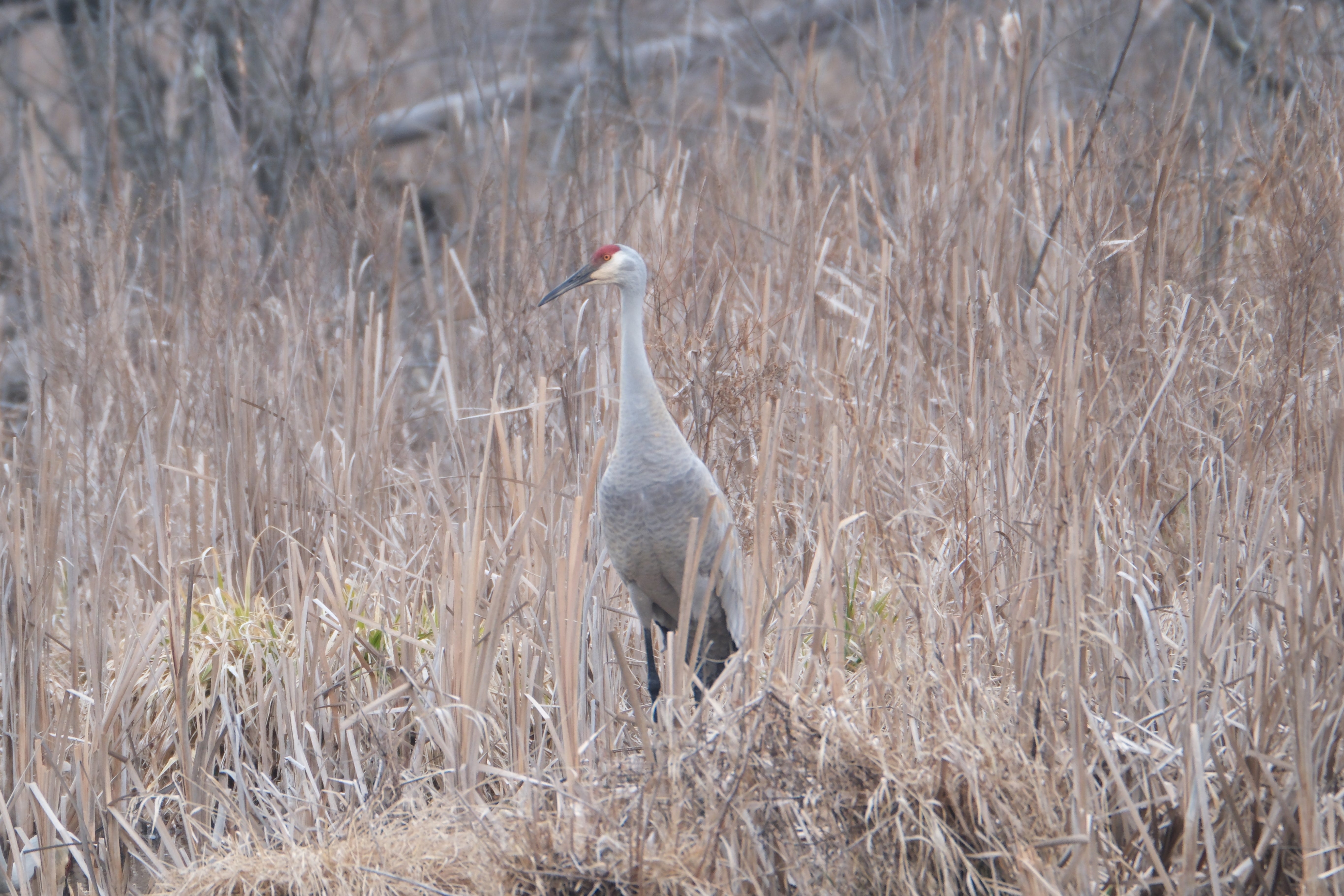
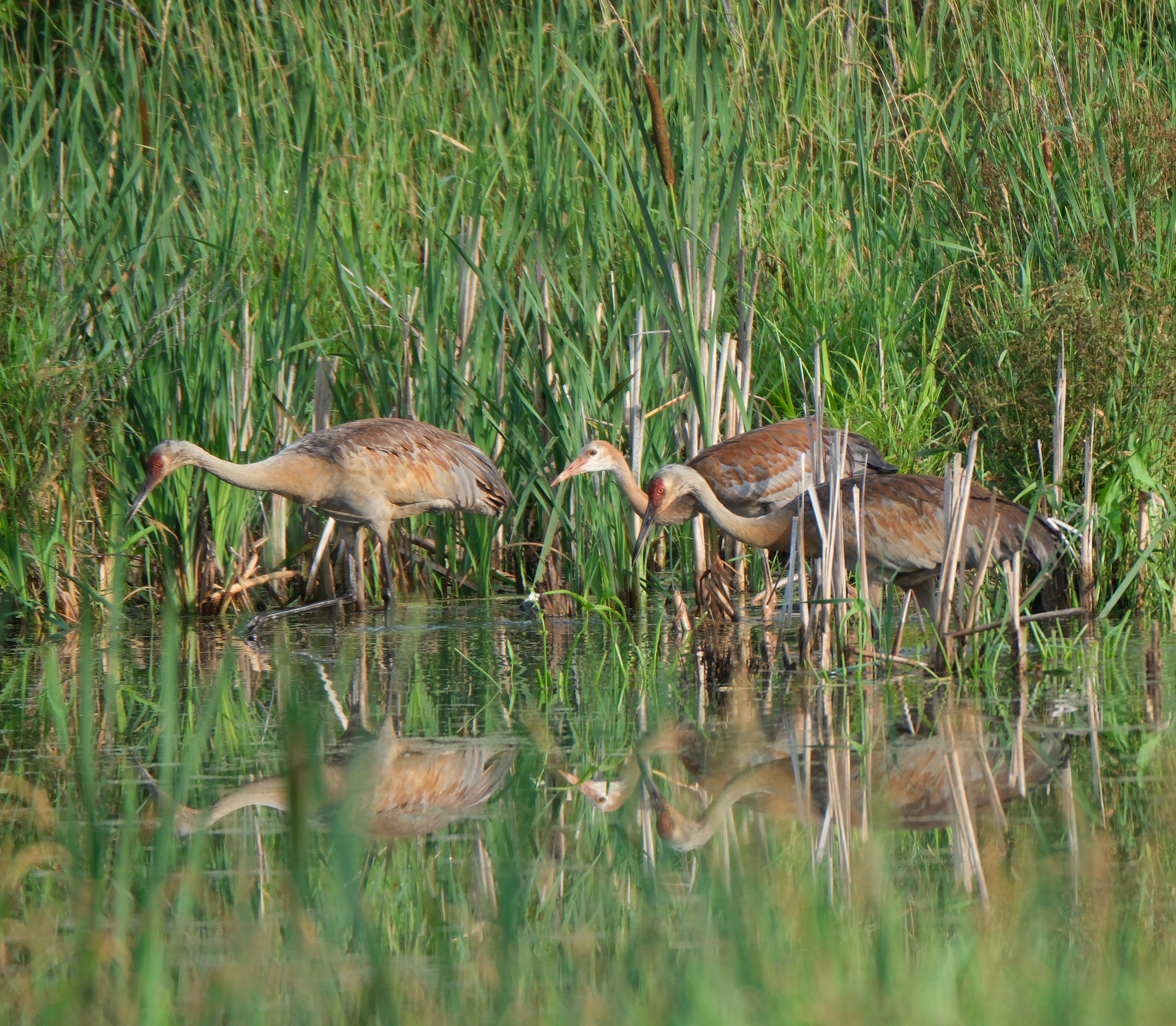
This photo, and the one of the pair further above, show what cranes look like when they arrive. As you can see below, by the time they’re nesting, they’ve gone through quite the transformation.
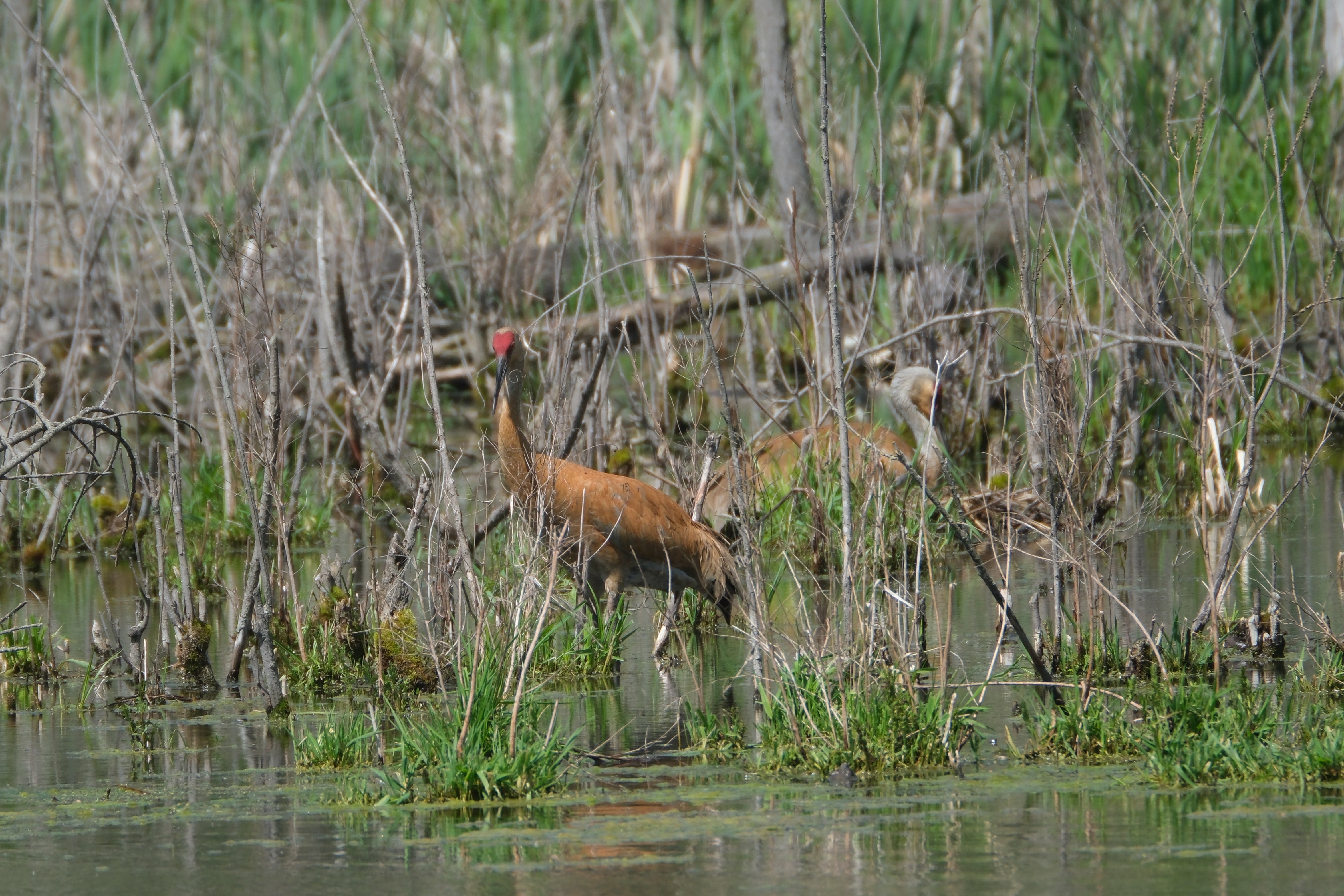
I’ve read the color change is to assist with camoflauge in their marshy habitat. Though, I do wonder if it serves other purposes, as well. They’re fairly well hidden without the dyed feathers, which resemble the color of a Great Blue Herons. With dyed feathers, they do look larger and their feathers don’t seem to rest as closely together.
Painted or not, the feathers are beautiful, it’s no wonder they were used in hats and other human decorations prior to passage of the Migratory Bird Treaty Act in 1918. Without passage of the bill, which severely limited the conditions under which migratory birds could be hunted, we would likely be walking a world without these fantastic birds, as well as many, many others. In the 1930’s there were an estimated 25 breeding pairs in Wisconsin. Since then, the population has rebounded considerably - to the point where a Sandhill Crane hunting season has been proposed. I’ll save my thoughts on that for another day!
Nesting
Sandhill cranes build their nest together and it’s unclear which of the pair selects the site. I like to think this scientific uncertainty is due to joint decision making in the species. I imagine them wandering through a marsh, evaluating the various locations, discussing the merits, until they settle on a spot that works for each. One spot denied because it was too exposed, another because it’s too far from the water, perhaps another because the view was terrible.
The right site is near or on shallow water, near emerging grasses and reads. Some Sandhills will nest in a field with proximity to water. As you can see below, the nests are often barely off the water. The grass is starting to emerge as well. Very soon, this spot will be well hidden.
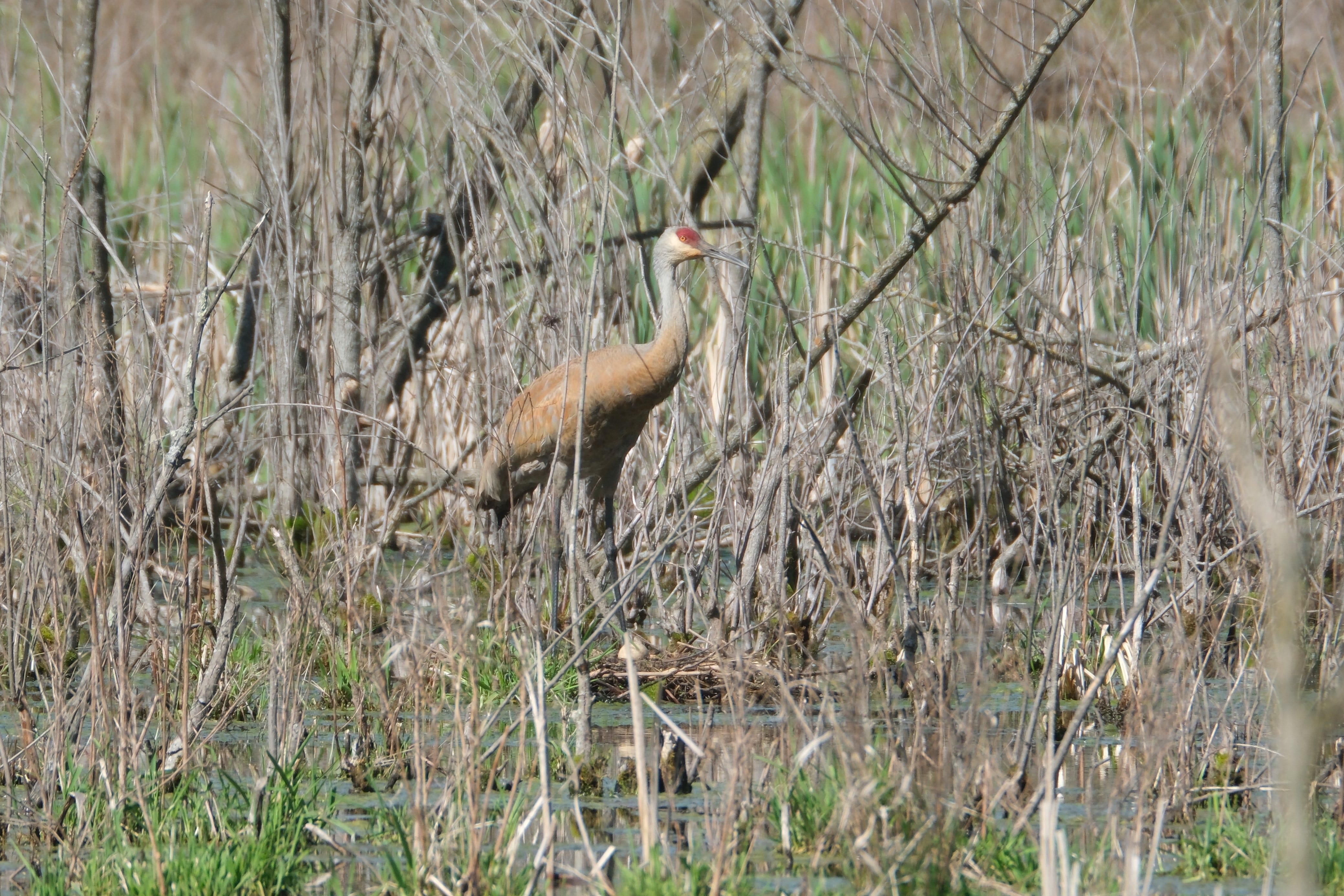
Each season, they will lay one or two eggs. This year, I’ve only seen one egg in the nest. Please note: the Sandhill Crane rose from the nest upon the return of its mate. I had been watching for about thirty mintues before the mate arrived. After they greeted each other, this crane preened a bit and settled back down on the egg.
On average, it takes about thirty days for the egg to hatch. My earliest photo of the nesting Sandhill is almost exactly a month ago.
The Colts
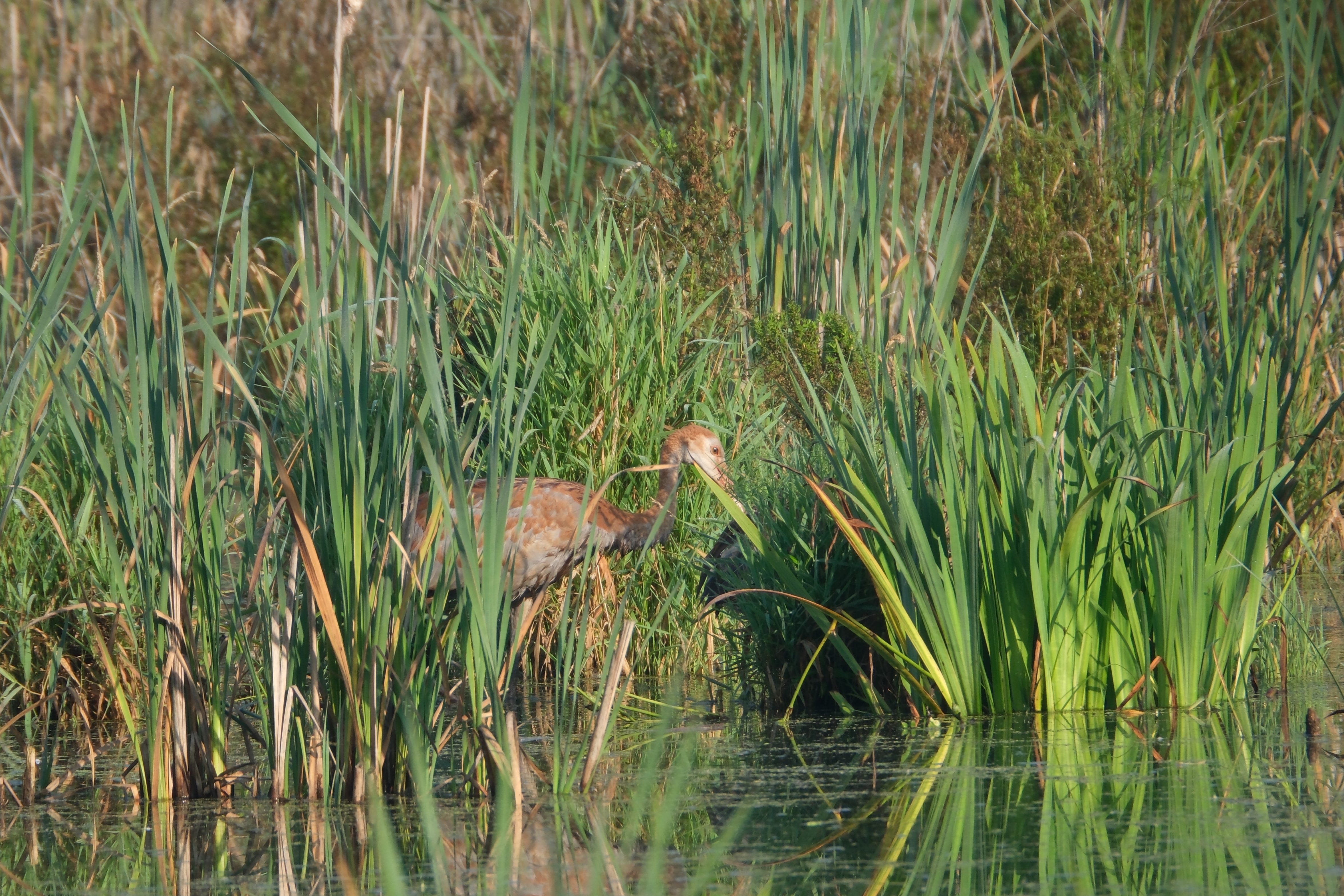
In 2022, the first year I spotted Sandhill Cranes in the area, I caught them with colts. Back then, I wasn’t spending too much time around Rush Creek so I don’t know what ultimately happened, but usually Sandhill Cranes raise one colt a year.
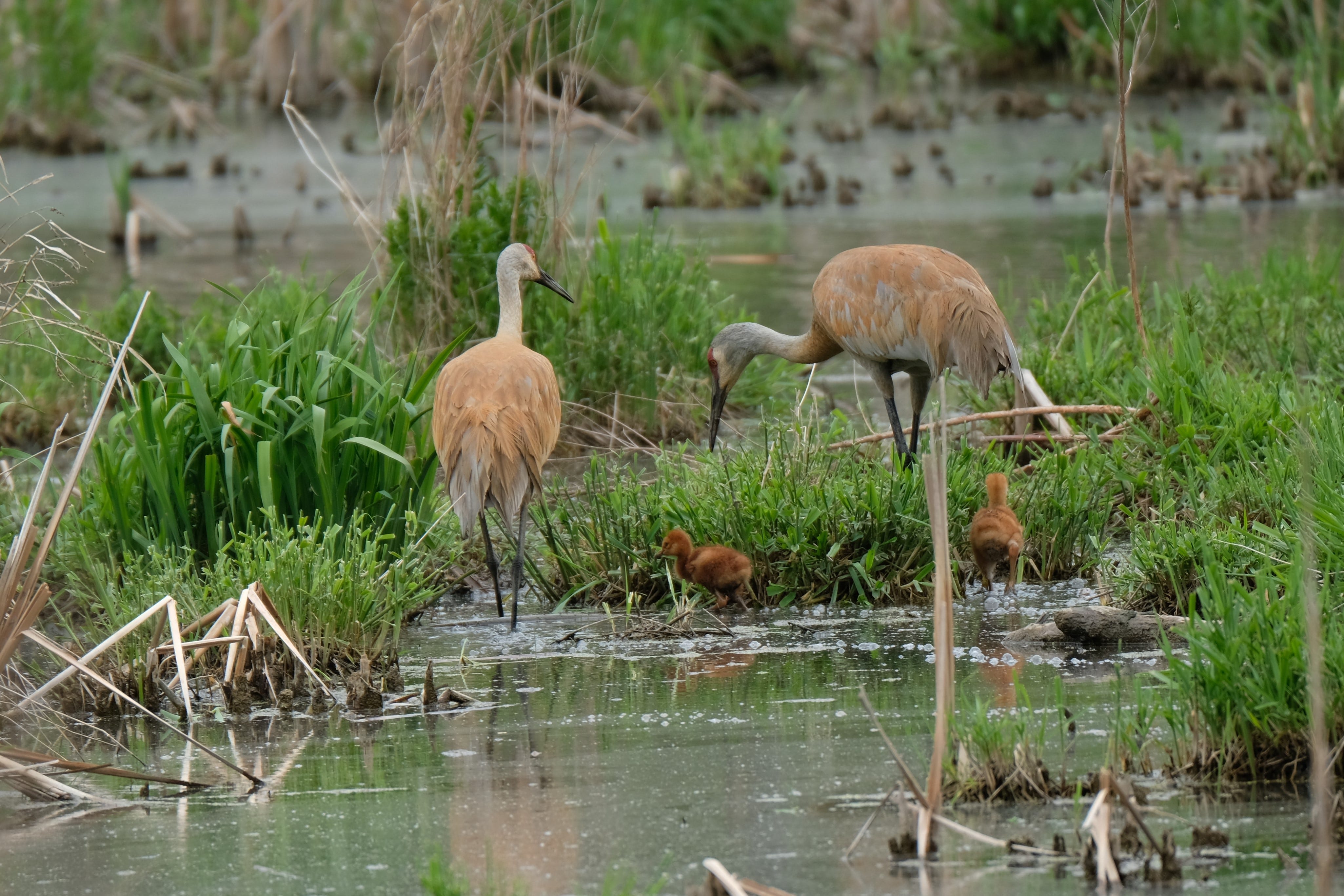
Colts stay with their parents, and receive care from them, for up to ninth months, a very long time for birds. Considering the small size of their broods, it make sense that they would adopt extended care to help ensure survival.
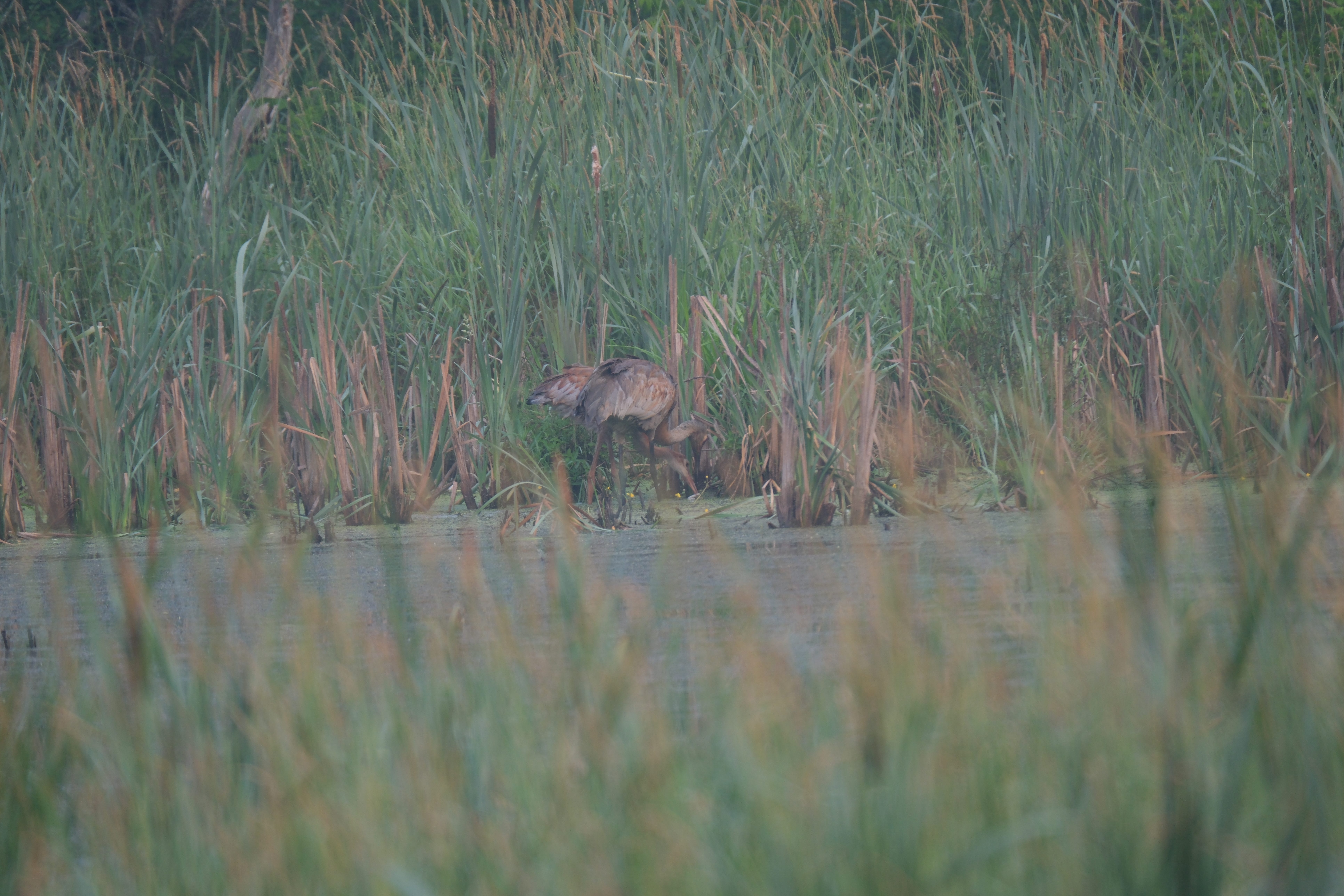
The colts migrate south with their parents and set off on their own before the parents lay their next clutch.
I look forward to my first glimpse of the Sandhill Crane colt this year. Until then, I swing by their nest site regularly and enjoy the occasional glimpses through the reeds and tall grasses.
The pictures above are a selection taken from March 2022 and May 2024. The wildfires in Canada last year resulted in many weeks of smoky air and many of the picutres have the milky glaze as in the photo above.
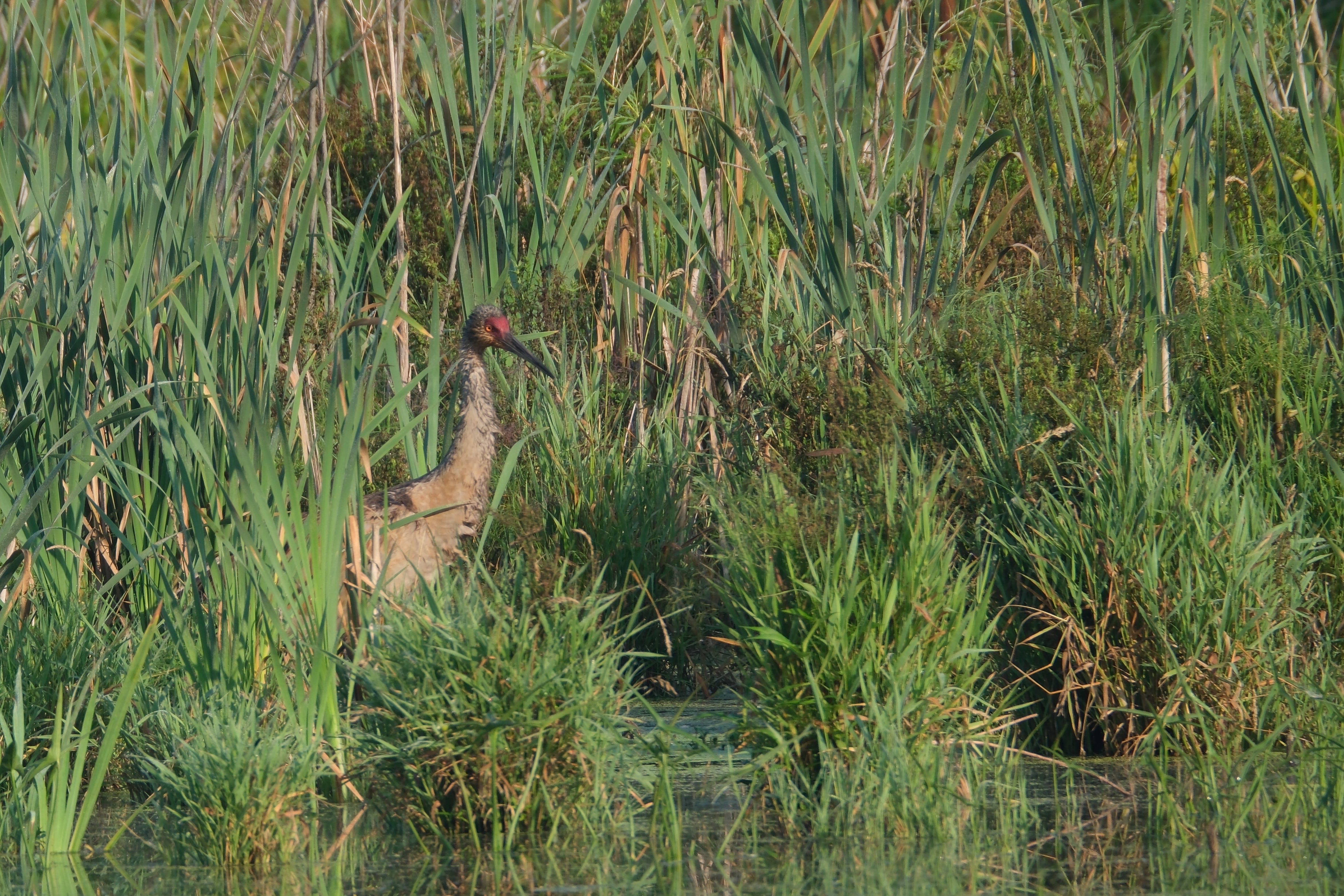
The photos that follow are from July 2023, after a lot of the smoke had abated. I’m sharing these just for fun.
Standing in contrast with the tall, green grass, the Sandhill Crane looks prehistoric. They’re great fun to watch. Hope you enjoy!